






CCTV Camera Features That Actually Matter for Security


Not all CCTV camera specs translate to real-world security — this guide explains which features actually matter and why deployment decisions are just as critical as hardware.
- Resolution only adds value when matched to purpose — facial recognition and plate reading demand high detail, but general monitoring often benefits more from correct placement than higher megapixels.
- Low-light performance is one of the most consequential specs to evaluate, since most security incidents happen outside ideal lighting conditions — choose between IR, colour night vision, or starlight based on your site’s actual environment.
- Field of view and lens choice are frequently underestimated — defining what each camera needs to capture (wide area vs. fixed point detail) should determine lens selection before you look at any other spec.
- Environmental ratings such as IP and IK scores are among the most commonly overlooked specs, yet they directly determine whether a camera survives the conditions of your installation long-term.
- Advanced features like AI analytics and two-way audio add genuine value only when they match your monitoring habits and risk profile — always ask whether a feature changes how you’d respond to an incident, not just whether it’s available.
When you start researching CCTV cameras, it quickly becomes clear that most of the numbers on spec sheets — megapixels, compression codecs, bitrates — are presented without any context for what they actually change on your site. A camera with impressive figures on paper can still leave you with blurred footage, coverage gaps, or a system that fills your storage drive within days. Understanding which features genuinely affect security outcomes, and which are simply marketing metrics, is what separates a system that works from one that looks good in a brochure.
This guide focuses on what matters in practice: how each feature affects what your cameras capture, store, and communicate when it counts. Whether you are a shop owner in Manchester city centre, a warehouse operator in Trafford Park reviewing an upgrade, or a security installer specifying equipment for a client across Greater Manchester, the goal is the same — to help you evaluate CCTV surveillance products by their real-world consequences rather than their technical labels alone.
Why Camera Specs Alone Don’t Tell the Whole Story
Manufacturer specifications describe what a camera can do under ideal conditions — not what it will actually deliver when mounted twelve feet up in a poorly lit car park, or pointed through a window at a sun-drenched entrance. That gap between specified and real-world performance is where most buying mistakes happen.
A 4K camera with a narrow field of view can leave an entire aisle unmonitored. A well-placed 2MP camera with the right lens can produce footage that is genuinely useful to investigators. According to the College of Policing Crime Reduction Toolkit, CCTV schemes with higher degrees of camera coverage showed a statistically significant correlation with greater crime reduction. How you deploy cameras — their placement, field of view, and coverage overlap — matters as much as the hardware itself.
Which CCTV Camera Features Actually Matter?
Not every specification on a camera datasheet has a meaningful impact on day-to-day security. The features that genuinely matter are those that change what your system captures, how usable that footage is, and whether your cameras stay effective as conditions shift throughout the day.
Resolution and Image Clarity
Resolution determines whether footage is detailed enough to identify a face, read a vehicle plate, or serve as evidence. Higher resolution matters most for these specific purposes. For general area monitoring or deterrence, placement and lens choice often have a bigger impact than megapixel count alone.
A study published in the European Journal on Criminal Policy and Research, analysing over 251,000 crimes recorded by British Transport Police, found that CCTV’s usefulness as an investigative tool is significantly affected by camera placement and coverage quality — not resolution alone. The highest megapixel count available does not substitute for thoughtful positioning and the right lens.
Night Vision and Low-Light Performance
Because most security incidents happen outside ideal lighting conditions, low-light performance is one of the most important factors to evaluate. The right technology depends on your site’s specific conditions:
- Standard infrared (IR) night vision — produces greyscale imagery and works in complete darkness.
- Colour night vision — uses ambient light to retain colour at night, helping distinguish clothing or vehicle colours.
- Starlight sensors — designed for very low-light environments where some illumination is present.
In areas like Manchester’s Northern Quarter or the back streets around Piccadilly, where ambient lighting varies considerably, the difference between a standard IR camera and a colour night vision unit can be the difference between identifiable and unusable footage. For a fuller comparison, see the dedicated guide on night vision CCTV cameras explained.
| Technology | Works in Complete Darkness | Colour Detail | Best Suited For |
|---|---|---|---|
| Standard IR Night Vision | Yes | No (greyscale) | Locations with no ambient light |
| Colour Night Vision | No (requires some ambient light) | Yes | Areas with street or building lighting |
| Starlight Sensor | No (requires very low-level light) | Varies by model | Very low-light environments with minimal illumination |
Field of View and Lens Choice
Mismatched lenses are one of the most common reasons a newly installed system has blind spots. A wide-angle lens covers more ground but captures less detail at distance. A narrow focal length zooms in on a specific area but requires more cameras to cover the same space.
Before specifying a camera, define what it needs to do: is it monitoring a wide open area for movement, or capturing readable detail at a fixed point like an entrance or till? That answer should drive the lens choice — not the camera’s maximum advertised field of view.
Recording and Storage Options
How your system records footage is as important as how clearly it captures it. The three main approaches each suit different operational requirements:
- Continuous recording — provides an unbroken archive but consumes storage quickly and can make locating specific incidents time-consuming.
- Motion-triggered recording — reduces storage use and speeds up incident retrieval, though reliability depends on how well sensitivity is calibrated. See the dedicated article on motion detection CCTV cameras for more detail.
- Scheduled recording — continuous during high-risk periods, reduced or off outside them. A practical middle ground for many sites.
NVR vs DVR: Choosing the Right Recorder
NVR (Network Video Recorder) systems work with IP cameras over a network, offering greater resolution support, easier remote access, and more flexible camera placement. DVR (Digital Video Recorder) systems connect to analogue cameras via coaxial cable and are often retained in upgrades where existing cabling is reused. Neither is universally better — the right choice depends on whether you are building from scratch or upgrading an existing installation.
| Factor | NVR (Network Video Recorder) | DVR (Digital Video Recorder) |
|---|---|---|
| Camera type | IP cameras | Analogue cameras |
| Cabling | Network (Ethernet / PoE) | Coaxial cable |
| Resolution support | High | Lower (analogue-limited) |
| Remote access | Easier to configure | Possible but more complex |
| Camera placement flexibility | High | Limited by cable runs |
| Best for | New installations | Upgrades reusing existing cabling |
Smart Camera Features and AI Analytics

AI-driven features — covered in detail in the guide on smart CCTV analytics explained — now appear across a wide range of equipment at multiple price points. Object detection, line-crossing alerts, people counting, and loitering detection can add genuine value in the right context.
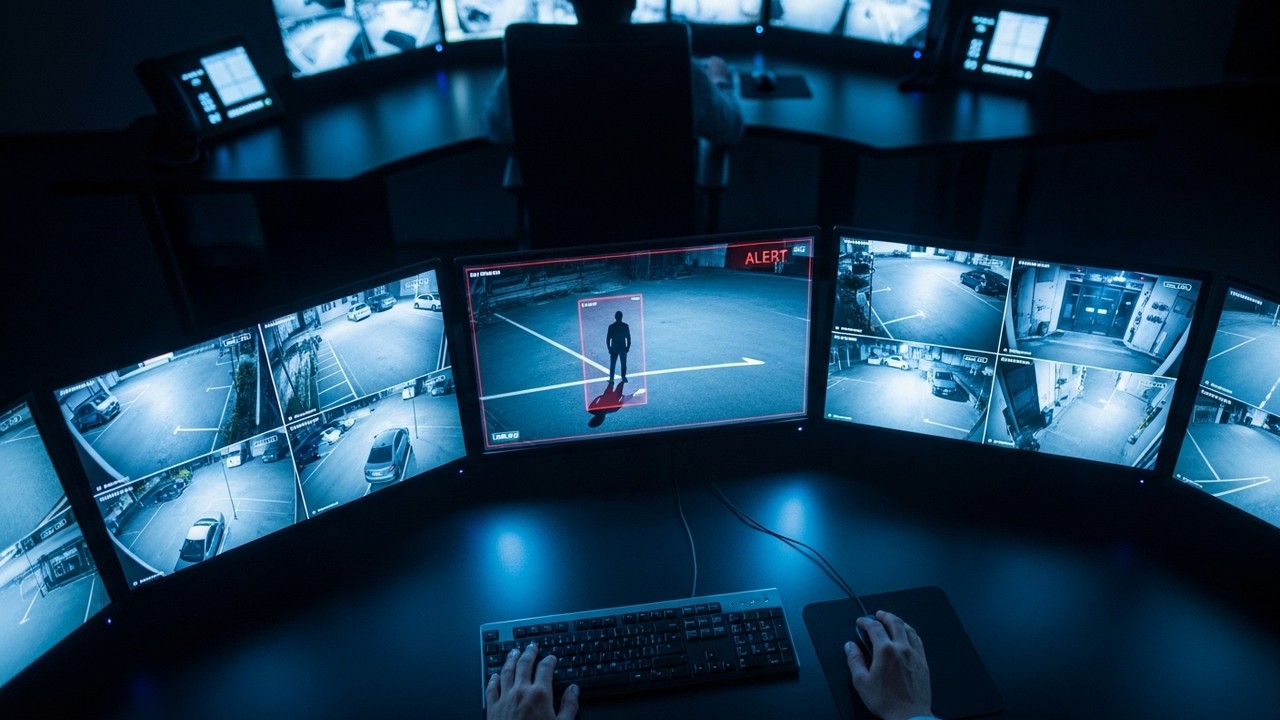
On a retail floor where staff cannot monitor live footage continuously, an alert triggered when someone enters a restricted area is a meaningful capability. In a small office with minimal foot traffic, the same feature may generate false positives without adding any real security benefit.
Two-way audio security cameras have clear practical uses — remote reception, delivery management — but limited value in a purely passive monitoring setup. The right question is not whether a technology is available, but whether it changes how you respond to an incident on your specific site.
Environmental and Installation Factors for Greater Manchester Sites
IP and IK Ratings for Outdoor Use
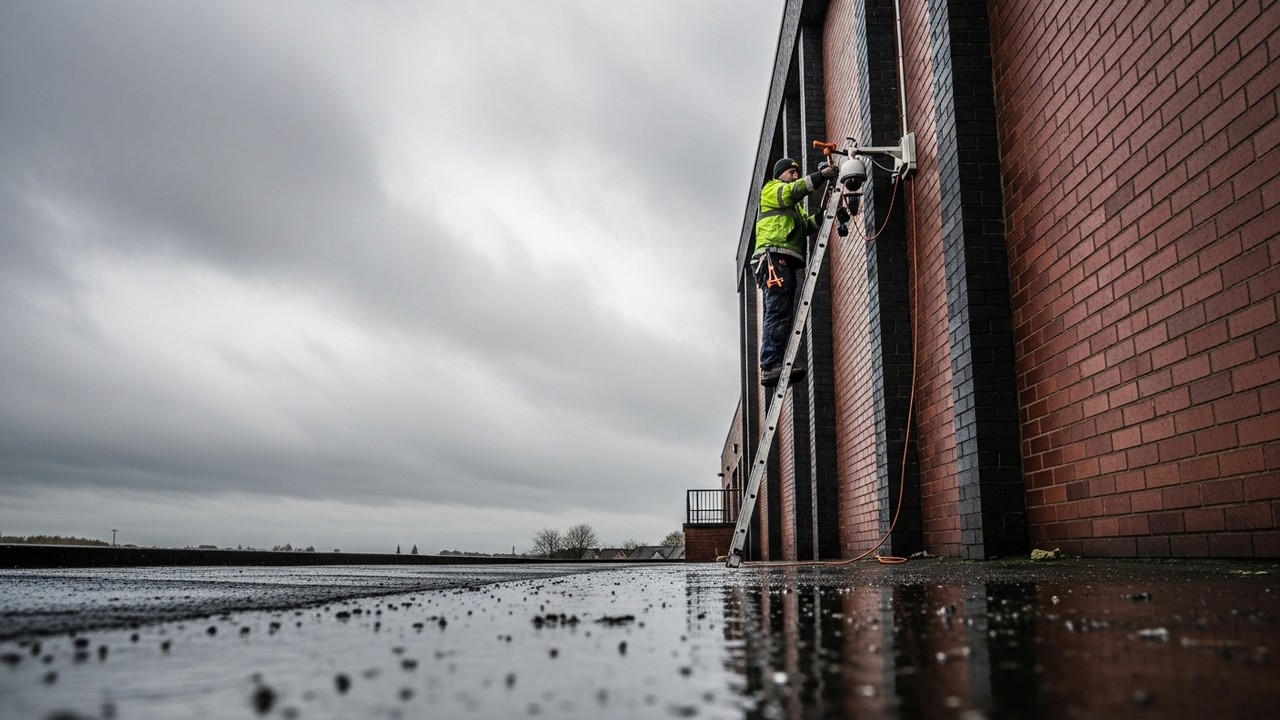
For outdoor installations across Greater Manchester — where wet and overcast conditions are common for much of the year — cameras rated below IP66 carry a real risk of failure in autumn and winter. IP65 resists dust and low-pressure water jets; IP67 extends to temporary submersion. IK ratings for vandal resistance matter in any location where cameras may face deliberate interference — car parks, stairwells, public-facing entrances. Ignoring these ratings risks losing coverage at exactly the moments it is most needed.
PoE vs Traditional Cabling
Power over Ethernet (PoE) carries both power and data over a single network cable, reducing installation time and the number of independent power supplies required. For new installations, PoE is generally the more practical choice. For upgrades to systems built on coaxial infrastructure, the calculation changes. The right answer is site-specific, with downstream implications for recorder compatibility, camera selection, and future expansion.
How to Read a Camera Specification Sheet

A datasheet that lists maximum resolution without stating the frame rate at that resolution, or quotes night vision range without specifying scene reflectance conditions, is giving you partial information. When comparing equipment, ask suppliers to confirm real-world performance in conditions that match your site — not peak figures under optimal test conditions.
Key questions to ask any CCTV supplier before purchasing:
- What resolution and frame rate does this camera maintain under low-light or IR conditions?
- What is the maximum recommended installation distance for the specified lens at this resolution?
- Is this camera compatible with your existing NVR or DVR, including all listed analytics features?
- What is the camera’s operating temperature range, and does it meet the requirements of the installation environment?
For multi-camera systems, high-risk sites, or projects where CCTV needs to integrate with intruder alarm or access control infrastructure, professional advice from a qualified installer adds genuine value. The College of Policing notes that CCTV is most effective when combined with real-time monitoring and other crime prevention measures — meaning the design decisions made before installation often determine whether the investment delivers its intended outcome.
Choosing a Supplier Who Understands the Specification
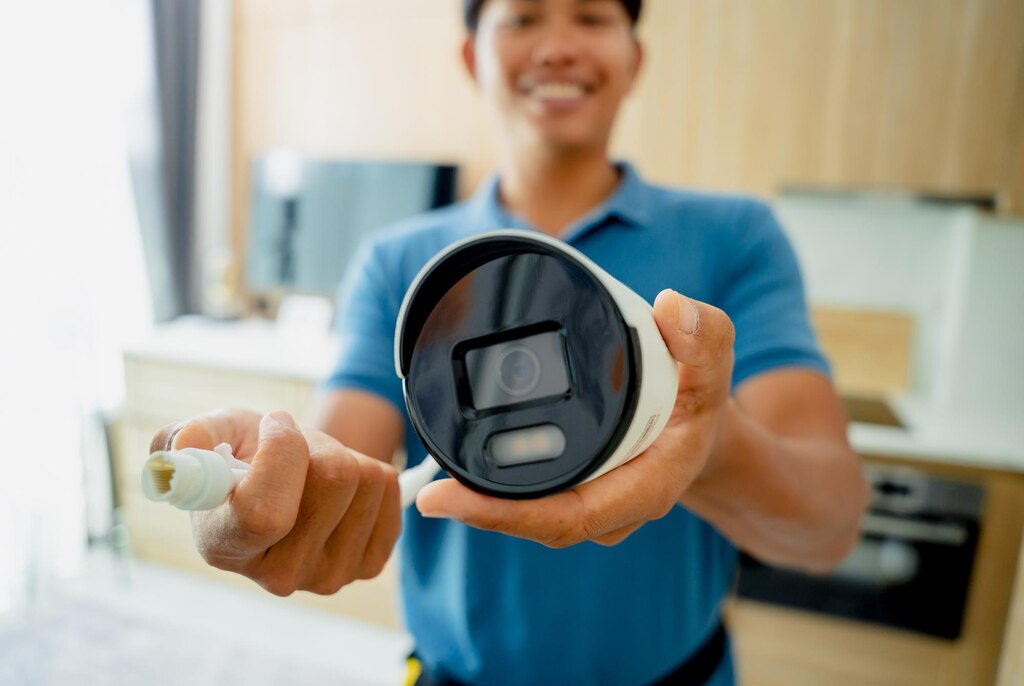
For trade buyers — installers, integrators, and commercial buyers specifying systems for their own sites across Manchester and the wider North West — the relationship with a distributor matters beyond product availability. A supplier who can discuss camera features in the context of your project, flag compatibility issues before they become installation problems, and access authorised product lines with full manufacturer support is genuinely different from one that simply fulfils orders.
Knight Security operates as an authorised Dahua distributor, supplying trade-only buyers across the UK with professional security equipment including the full range of CCTV and surveillance systems. Every approved trade customer is assigned a dedicated account manager — a named contact who understands your account and can support project specification directly. Combined with next-day delivery on over 2,000 in-stock products and 30-day credit accounts, it is a structure built around what trade professionals actually need to complete projects reliably. If you are working through a camera specification or planning a new installation in Manchester or elsewhere across Greater Manchester, get in touch with Knight Security and speak to your account manager today.

Frequently Asked Questions About CCTV Camera Features
What resolution do I actually need for a CCTV camera?
It depends on what the camera needs to capture. For facial identification or number plate recognition, 4MP or higher is advisable. For general area monitoring or deterrence, 2MP is often sufficient. Placement and lens choice have as much influence on usable footage quality as resolution.
How important is night vision for outdoor CCTV cameras?
Very important. Most security incidents occur in low-light conditions. Standard IR night vision works in complete darkness but produces greyscale images. Colour night vision retains colour detail using ambient light, which can make a meaningful difference when identifying clothing or vehicle colours during an investigation.
What IP rating does a CCTV camera need for outdoor use in the UK?
IP66 is the recommended minimum for outdoor use in the UK. It protects against dust and powerful water jets, making it suitable for year-round British weather. IP67 offers additional protection against temporary submersion. IK10 is advisable for locations where vandal resistance is a concern.
What is the difference between NVR and DVR systems?
NVR systems work with IP cameras over a network and support higher resolutions, remote access, and flexible layouts. DVR systems connect to analogue cameras via coaxial cable. For a new installation, NVR is generally the better choice. For an existing analogue setup, DVR may allow you to reuse current cabling and reduce costs.
Are AI analytics features worth the extra cost on a CCTV system?
They can be, depending on your site. Features like loitering detection or line-crossing alerts add real value in unmanned or high-footfall environments. In smaller, well-monitored premises, they may add complexity without a proportionate security benefit. Match the feature to a specific operational need before committing.
Does motion-triggered recording miss incidents that happen quickly?
If sensitivity is calibrated correctly, motion-triggered recording captures incidents reliably. Most modern systems include a pre-event buffer, recording a few seconds before the trigger point. Miscalibrated sensitivity — set too low or too high — is the main cause of missed events or excessive false triggers.