






How Active Deterrence CCTV Cameras Stop Intruders

Key Takeaways
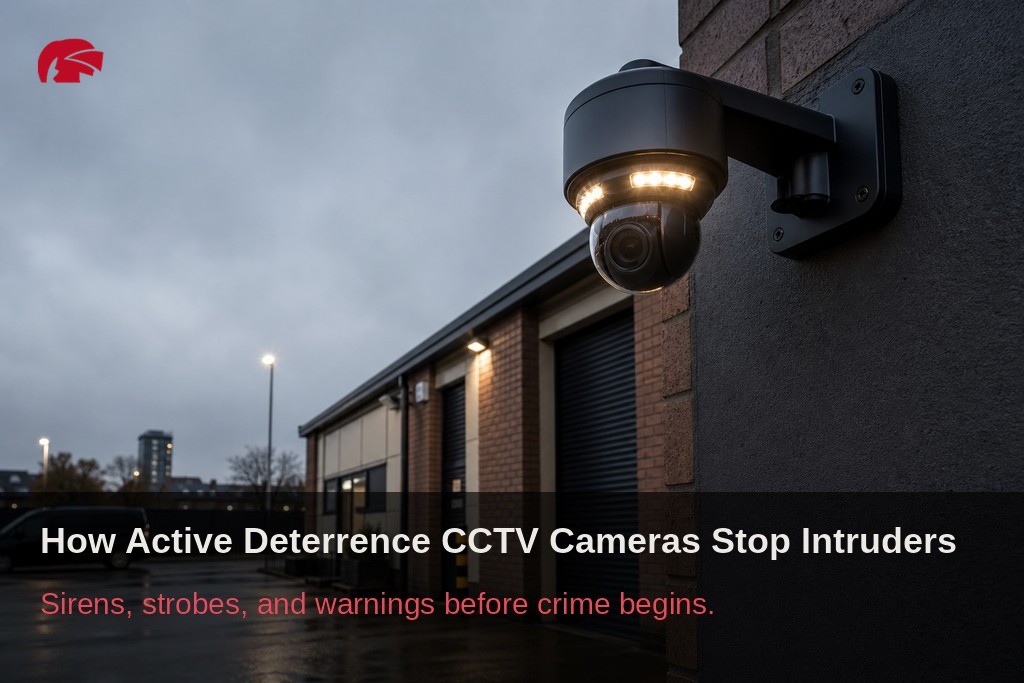
Active deterrence CCTV cameras use sirens, strobes, and spoken warnings to stop intruders in the moment rather than simply recording what happened.
- Unlike standard CCTV, active deterrence cameras respond instantly to detected movement using a camera siren and strobe, spoken warnings, and audible alerts to interrupt criminal behaviour before it escalates.
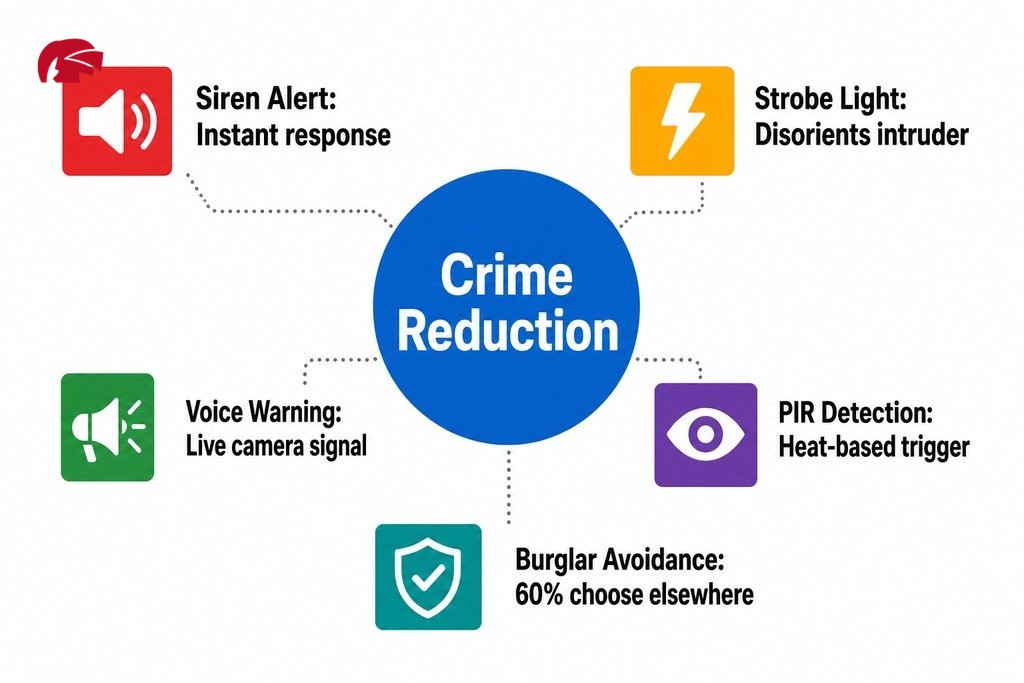
- Research shows that CCTV combined with audible alarms raises crime reduction from 13% to 34% compared to cameras used alone, and 60% of burglars will avoid a target where cameras or alarms are visible.
- Detection calibration and alert scheduling are critical to performance; a poorly configured proactive deterrent camera will either miss genuine threats or trigger constantly on vehicles and wildlife.
- The most effective placement for a warning light security camera is at clear entry and exit points with limited legitimate foot traffic during off hours, such as car parks, warehouse perimeters, and retail entrances.
- For commercial sites or multi camera setups, working with a qualified installer from the outset ensures the intruder warning camera features are correctly configured and integrated with existing recording infrastructure.
Most security cameras do one thing: they record. They capture what happened, preserve the footage, and hand over the evidence after the fact. Active deterrence CCTV cameras take a fundamentally different approach. Rather than waiting for a crime to complete, they respond the moment a threat is detected, using built-in sirens, strobe lights, and spoken warnings to interrupt suspicious behaviour before it escalates. For homeowners, shop owners, and warehouse operators across Manchester and the surrounding region, that shift from passive recording to proactive response changes what a camera can actually achieve.
Research from the College of Policing found that CCTV combined with complementary measures such as audible alarms raises crime reduction from 13% to 34%, compared to cameras used in isolation. That gap reflects exactly why these systems have become a serious consideration for any property where prevention, not just documentation, is the goal.
What Are Active Deterrence CCTV Cameras?
Active deterrence cameras are security cameras that do more than record; they react. When movement is detected within a defined zone, the camera immediately triggers a combination of responses: a siren, a strobe light, and often a spoken warning. The goal is to make an intruder aware they have been seen and that a response is already underway.
Standard CCTV operates silently. A potential intruder may not even notice a camera is present until police arrive with footage hours later. Active deterrence systems interrupt criminal behaviour at the earliest possible moment, ideally before anyone sets foot on the property or forces entry.
Research from the Office of Justice Programs confirms that actively monitored camera schemes tend to produce larger crime reduction effects than passive recording systems. A University of North Carolina study found that around 60% of burglars reported they would choose another target upon encountering alarms or cameras, which underlines why the visible, audible nature of these systems can be so effective.
| Feature | Standard CCTV Camera | Active Deterrence Camera |
|---|---|---|
| Records footage | Yes | Yes |
| Real-time response | No | Yes |
| Siren | No | Yes |
| Strobe light | No | Yes |
| Voice warning | No | Yes |
| Interrupts intrusion as it begins | No | Yes |
| Deters without monitoring staff | No | Yes |
How Active Deterrence Cameras Work
Siren, Strobe, and Voice Warning Working Together
The deterrence effect does not come from any single feature. It comes from multiple responses firing simultaneously or in rapid sequence:
- Strobe light: Disorients the intruder and draws attention to the detection point, making the scene conspicuous to anyone nearby.
- Siren: Creates urgency and raises the perceived risk of being caught, audible well beyond the immediate area.
- Voice warning: Removes any doubt about whether the camera is live and responsive, delivering a clear, unambiguous message.
Together, these elements are designed to deter within seconds, which is the window that matters most in preventing an intrusion from developing further.
How Motion Detection Triggers the Response
Active deterrence cameras typically use one of two detection methods, or a combination of both:
- Passive infrared (PIR) sensors detect the heat signature of a moving body. They are reliable in low-light conditions and less prone to triggering on background environmental movement.
- Video-based detection analyses changes in the camera’s field of view frame by frame, allowing configurable triggers such as virtual line crossing or zone entry.
Many current models use both in tandem. This dual-verification approach reduces false alarms while maintaining fast response times. Sensitivity settings play an important role. A camera on a quiet residential driveway can be calibrated more tightly than one covering a busy loading bay. Getting this right at installation separates a reliable deterrent from one that either misses genuine threats or fires constantly on passing vehicles and wildlife.
Customising Warning Messages and Alert Schedules
Modern systems offer a useful degree of flexibility. Pre-recorded voice warnings can be replaced with site-specific messages, which is particularly useful for retail entrances or industrial sites where a tailored prompt carries more authority. The active deterrence response can also be limited to specific hours, for example, full sirens and strobes overnight in a car park, without triggering during business hours when foot traffic is legitimate.
The right configuration for a residential driveway in Salford is not the same as one for a Manchester city centre retail unit or an industrial perimeter in Trafford Park. That adaptability is what makes the technology genuinely scalable across different property types.
Where Active Deterrence Cameras Deliver the Most Value in Manchester
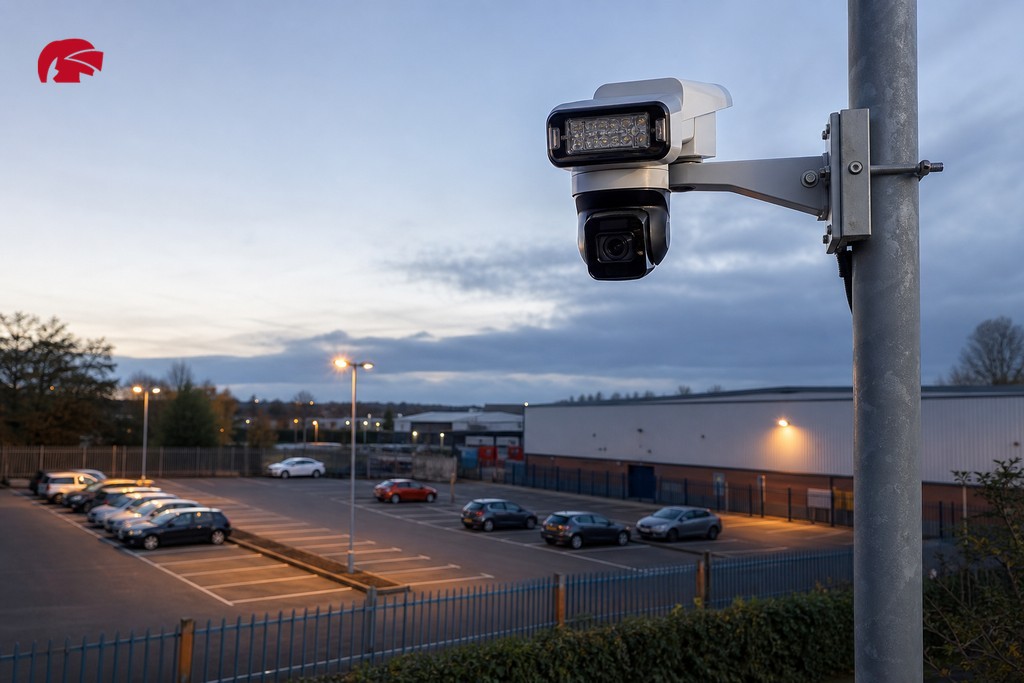
The strongest results come from areas with clear entry and exit points, limited legitimate foot traffic during off-hours, and a layout that makes the camera’s response visible and audible to an intruder. Locations where these cameras are particularly effective include:
- Car parks: Vehicle crime decreased by approximately 51% in car parks deploying CCTV, according to a 40-year systematic review by the Office of Justice Programs. Active deterrence features can strengthen that effect further.
- Warehouse perimeters: Wide open spaces with defined access points suit detection zone configuration well, including larger industrial estates across Greater Manchester.
- Retail entrances: High-value stock and regular out-of-hours risk make proactive deterrence a practical choice for independent retailers and larger commercial units.
- Residential driveways: A single well-placed camera with PIR detection offers straightforward, cost-effective protection for homes across the region.
- Gated commercial yards: Clear boundaries make it easier to define detection zones and reduce false triggers.
The key is matching camera placement to risk areas rather than spreading coverage evenly. A camera positioned at the most likely access point, with well-calibrated detection and a clear line of sight, will consistently outperform three cameras placed without strategic thought.
What to Check Before Choosing an Active Deterrence Camera
Specifications vary considerably, and price alone is a poor guide to performance. The following factors are worth assessing before committing to a product:
- Detection range: A 15-metre PIR range behaves very differently on a wide open yard compared to a narrow alleyway.
- Siren volume and strobe brightness: These affect deterrence effectiveness but also have implications for neighbouring properties. Output levels should be confirmed before installation.
- Night vision performance: Non-negotiable for most UK applications given limited daylight hours across autumn and winter, particularly in the North West.
- Weather resistance rating: Should reflect the actual exposure the camera will face, including the wet conditions typical of Greater Manchester.
- System compatibility: Confirm codec support, network protocol compatibility, and whether the camera’s deterrence triggers can be logged through your existing NVR or DVR platform.
Standalone Camera or Networked System?
A standalone camera is a practical, cost-effective option for a single residential driveway or retail entrance with no existing system. It operates independently and requires minimal configuration. A networked system is better suited to commercial sites with multiple entry points, where footage needs to be centrally recorded, reviewed, and potentially shared with monitoring services or police.
The decision comes down to site scale, the number of risk areas to cover, and whether footage needs to feed into a broader security or compliance workflow.
| Factor | Standalone Camera | Networked System |
|---|---|---|
| Best suited for | Single entry point, residential or small retail | Multi-entry commercial or industrial sites |
| Configuration complexity | Low | Medium to high |
| Central footage recording | No | Yes |
| Remote monitoring capability | Limited | Yes |
| Integration with other security systems | No | Yes |
| Typical cost commitment | Lower | Higher |
When to Involve a Professional Installer
Active deterrence is highly effective in the right environment, but it has limitations. In high-traffic settings where people legitimately pass through during protected hours, false triggers can become a real problem, desensitising occupants to alerts and gradually undermining the deterrence effect. Proper detection calibration and scheduling are essential, and a camera deployed without professional setup rarely performs to its potential.
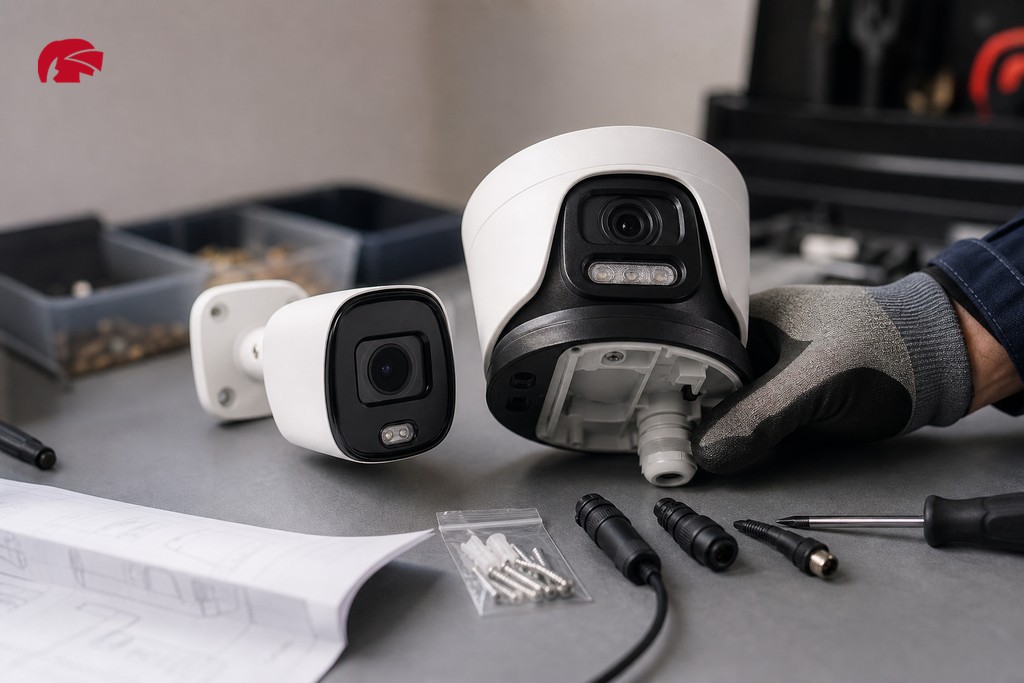
For commercial sites, multi-camera layouts, or any project involving network configuration, system planning, or integration with access control and intruder alarms, involving a qualified security installer from the outset is well worth it. Two-way audio security cameras and built-in microphone CCTV cameras can add further capability to a deterrence system, but they also introduce configuration requirements that benefit from professional commissioning. Getting the installation right from day one is significantly more efficient than troubleshooting a poorly configured system after the fact.
How Knight Security Supports Trade Customers Across Manchester and the UK
Knight Security supplies active deterrence CCTV cameras exclusively to trade customers, including installers, integrators, and security professionals working across Manchester, the wider North West, and throughout the UK. As an authorised Dahua distributor, Knight Security provides access to Dahua’s active deterrence product lines with the assurance of genuine stock, current firmware, and manufacturer-backed support.
Trade customers benefit from consistent pricing without time-limited promotions, next-day delivery on stocked units, and a dedicated account manager assigned to every approved account. Beyond product supply, Knight Security’s model is built around genuine project collaboration. Whether you are specifying a single warning light camera for a residential client in Stockport or planning a multi-site active deterrence rollout across a retail portfolio in the city centre, the account management and technical support teams are available to work through specifications with you, not simply process an order.
If you are sourcing active deterrence CCTV cameras for an upcoming project, get in touch with Knight Security today to discuss your requirements and find out how the team can support your work from specification through to delivery.
Frequently Asked Questions About Active Deterrence CCTV Cameras
What is the difference between an active deterrence camera and a standard CCTV camera?
A standard CCTV camera records footage passively without alerting anyone in the moment. An active deterrence camera responds in real time, triggering a siren, strobe light, and voice warning when motion is detected. This means it can interrupt an intrusion as it begins, rather than simply documenting it after the fact.
Can active deterrence cameras cause problems with neighbouring properties?
Siren volume and strobe brightness can affect neighbouring properties if not properly configured. Before installation, output levels should be confirmed and alert schedules set so the system only activates during appropriate hours. A professional installer can help configure the system to minimise disruption while maintaining effective deterrence.
Do active deterrence cameras work without an internet connection?
Many standalone active deterrence cameras can trigger their local siren and strobe without an internet connection, as the response is built into the camera hardware. However, remote alerts, live viewing, and footage sharing typically require a network connection. Networked systems offer significantly more management and monitoring capability.
Are active deterrence cameras suitable for residential use?
Yes. A single PIR-enabled active deterrence camera is a cost-effective option for protecting a residential driveway or garden. The key is correct placement and sensitivity calibration to avoid false triggers from passing vehicles or wildlife, which a qualified installer can handle during commissioning.
How do I know which active deterrence camera is right for my site?
The right camera depends on detection range requirements, lighting conditions, weather exposure, and whether the site uses an existing NVR or DVR system. For commercial or multi-camera projects, consulting a security professional or trade supplier such as Knight Security ensures the specification matches the site’s actual risk profile.