






What to Know Before Buying Built-In Microphone CCTV Cameras

Key Takeaways
Built in microphone CCTV cameras add valuable audio evidence but require careful planning around placement, recorder compatibility, and UK legal obligations before purchase.
- Built in microphone CCTV cameras capture synchronised audio and video, which can significantly strengthen evidence in disputes, incidents, or safety reviews at retail, warehouse, and commercial sites.
- Surveillance audio quality depends heavily on camera placement, ambient noise levels, and housing design; realistic expectations before installation prevent costly disappointment after commissioning.
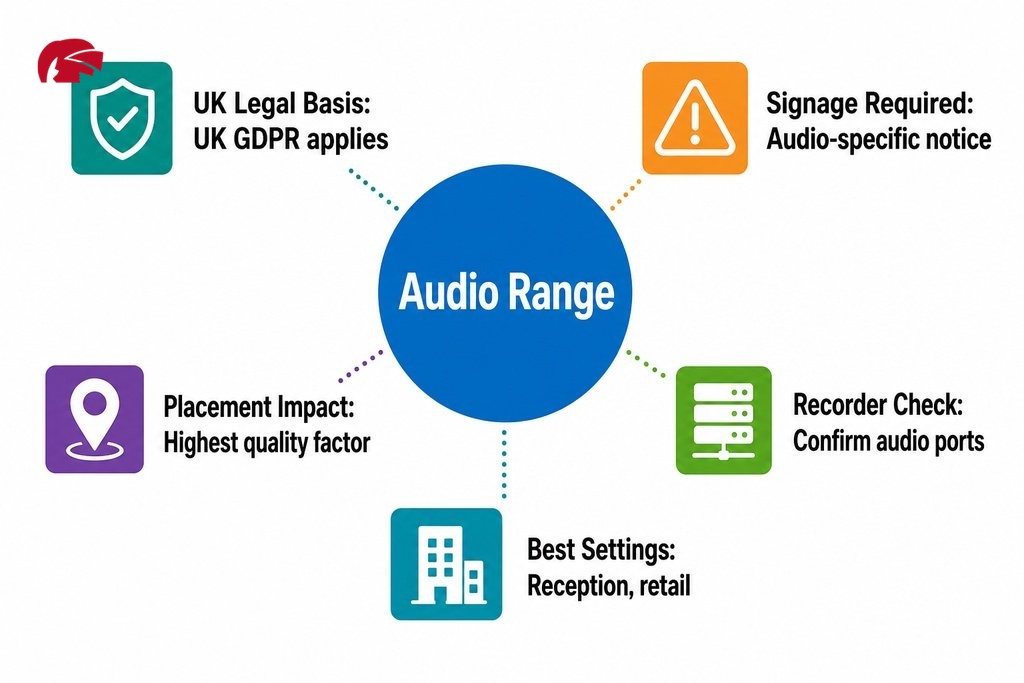
- Not all NVRs and DVRs support audio recording on every channel, so confirming recorder compatibility before finalising your system specification is an essential practical step.
- UK GDPR and the Regulation of Investigatory Powers Act 2000 apply to audio recording security cameras; businesses must update signage, privacy notices, and data protection practices to reflect that sound is being captured alongside video.
- For complex or multi zone commercial installations, involving a qualified installer and a technically knowledgeable trade supplier early in the process reduces legal and technical risk before any equipment is ordered.
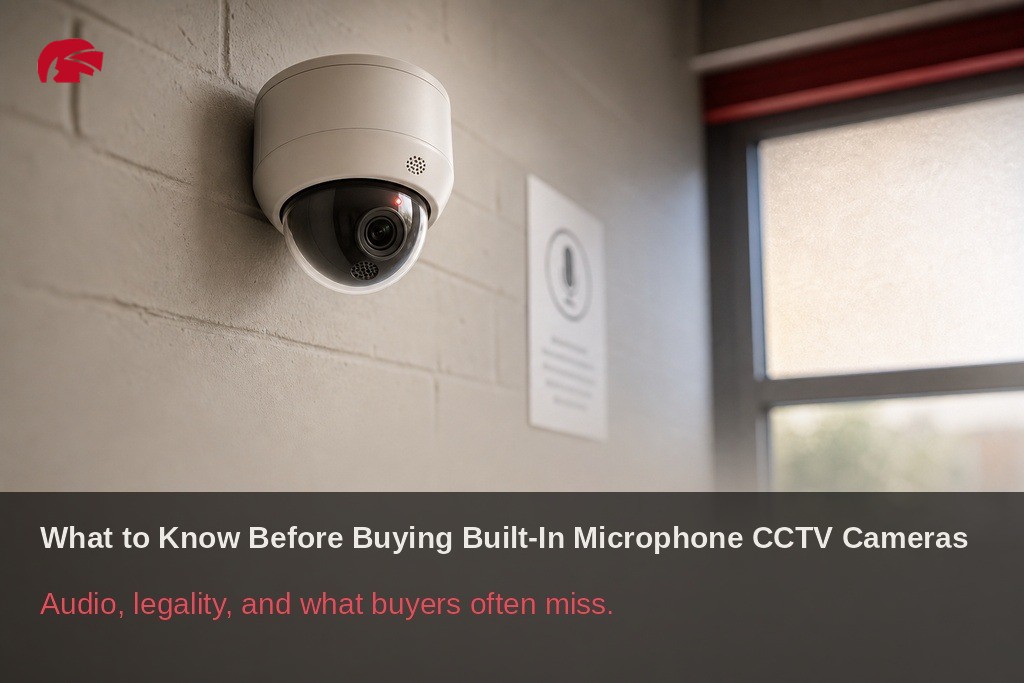
Choosing a security camera system is already a considered decision, but adding audio to the equation changes things significantly. Built-in microphone CCTV cameras capture richer evidence than video-only systems, but they also raise practical and legal questions that deserve honest answers before you commit. Whether you are protecting a retail premises in Manchester city centre, managing a warehouse in Trafford Park, or reviewing the security setup for a commercial unit across Greater Manchester, understanding how audio recording works alongside video will help you spend your budget where it genuinely counts.
With more than 5.5 million CCTV cameras estimated to be in operation in England and Wales, according to figures cited via Sound Event Detector EU, the surveillance market is crowded with options. Not all of them suit every situation. This guide covers what a buyer should know before specifying an audio-enabled system, from how camera sound capture works to where it adds real value and what legal obligations apply.
Why Audio Recording Changes the CCTV Decision
A standard video-only CCTV system captures what happens visually within a camera’s field of view. Audio recording security cameras capture what is said or heard in that same space, and that distinction carries consequences well beyond the technical.
For a shop owner, audio evidence can clarify whether a confrontation was initiated by staff or a customer. For a warehouse manager, it can confirm whether a safety instruction was communicated before an incident. For a homeowner, it may capture verbal exchanges that a video image alone cannot convey.
The evidentiary value of camera footage depends heavily on recording quality and placement, as demonstrated by a study of 251,195 crimes recorded by British Transport Police and published in the European Journal on Criminal Policy and Research. Adding audio to a well-placed camera builds on that foundation, but it is not a substitute for getting the fundamentals right first.
The decision to install audio-capable cameras also raises immediate questions around UK law, recorder compatibility, and whether the camera’s integrated microphone will perform as expected in your specific environment. Each of those areas is covered in the sections below.
How Built-In Microphone CCTV Cameras Work
Most built-in microphone CCTV cameras use small electret condenser microphones embedded within the camera housing. These microphones pick up sound from the surrounding environment and transmit it alongside the video signal to a recorder.
In IP camera systems, audio data travels over the same PoE network cable that carries video, which simplifies installation considerably. In analogue systems, the audio signal typically runs down the same coaxial cable used for video, though some installers prefer a dedicated cable run for cleaner audio. Either way, the result is a synchronised audio and video recording stored on a compatible NVR or DVR.
Integrated microphones are compact components designed for surveillance environments, not broadcast-quality sound capture. Their effective range is typically limited to a few metres under ideal conditions. Setting realistic expectations around surveillance audio quality will save buyers from disappointment after installation.
What Affects Surveillance Audio Quality
Several factors determine how useful recorded audio will actually be in practice.
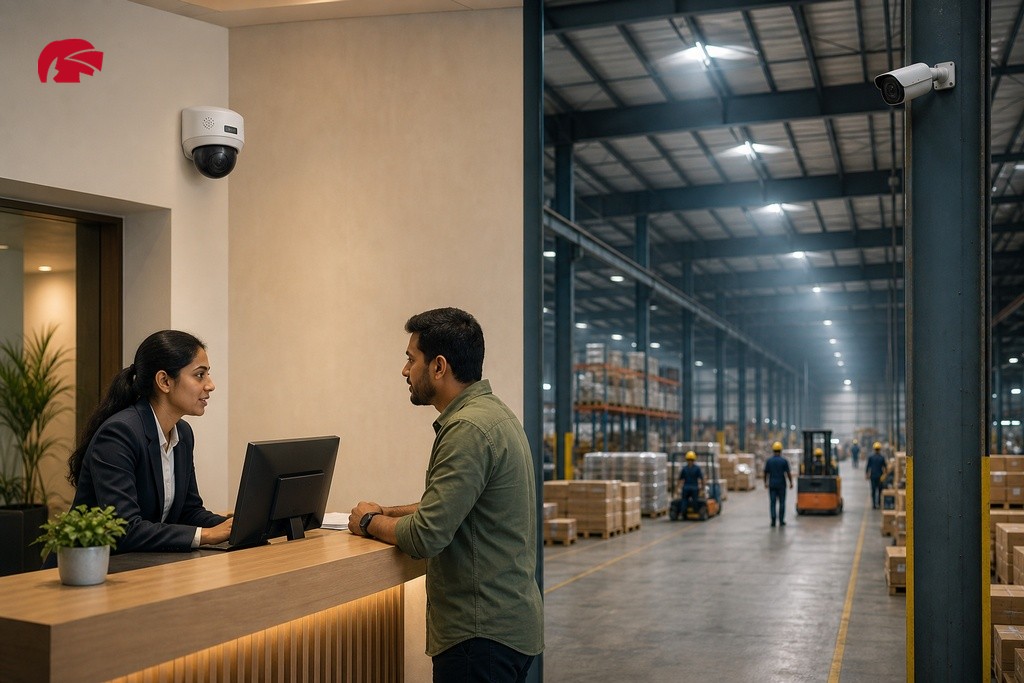
Camera placement is the most significant variable. A camera mounted at ceiling height in a large open space will capture substantial background noise alongside any conversation below, making speech difficult to distinguish. Cameras positioned closer to activity zones, such as a reception desk or warehouse entry point, tend to capture far more useful audio.
Outdoor conditions present a consistent challenge, particularly in Greater Manchester where wet weather and busy arterial roads are year-round realities. Wind, rain, and traffic noise all degrade audio clarity, and housings not designed with acoustic performance in mind can further muffle microphone sensitivity.
Ambient noise levels inside a building also matter considerably. In environments with constant machinery noise, music, or ventilation systems, integrated microphones may record an indistinct soundscape with limited investigative value. In quieter settings, even a modest built-in microphone can capture useful detail.
A Home Office evaluation of 14 CCTV schemes across the UK found that location is a critical determinant of overall CCTV effectiveness, and this applies equally to audio capture. Understanding your site conditions before purchase is always preferable to discovering limitations after installation.
| Factor | Impact on Audio Quality | Recommended Approach |
|---|---|---|
| Camera placement | High: distance and height reduce speech intelligibility | Mount close to key activity zones such as reception desks or entry points |
| Outdoor conditions | High: wind, rain, and traffic noise degrade clarity | Choose housings rated for outdoor acoustic performance; consider sheltered mounting positions |
| Ambient noise levels | Medium to high: machinery, music, or HVAC systems reduce usefulness | Assess site noise before specifying audio-enabled cameras; quieter environments benefit most |
| Microphone type | Medium: integrated electret condenser microphones have limited range | Set realistic expectations; integrated mics suit short-range capture only |
| Housing design | Medium: poorly designed housings can muffle microphone sensitivity | Confirm acoustic performance is considered in the product specification |
Compression, Bitrate, and Storage for CCTV Sound Recording
Adding audio to a CCTV system increases the volume of data that needs to be recorded and stored. Audio streams are typically compressed using codecs such as G.711 or AAC. While audio files are generally small compared to video, running continuous CCTV sound recording across multiple cameras will incrementally increase storage demands.
More critically, not all NVRs and DVRs support audio recording on every channel, and some budget recorders do not support it at all. Before finalising your system specification, confirm that:
- Your recorder has the correct number of audio-in ports, or supports audio over IP for network camera systems.
- Audio recording is enabled on the specific channels you intend to use, not simply available on the recorder as a whole.
Checking these details in advance prevents wasted expenditure and avoids the need to replace equipment after installation.
UK Legal Rules for Audio Recording Security Cameras
Audio recording introduces legal obligations that do not apply to video-only surveillance. Understanding these rules before you buy is essential.
UK GDPR governs how personal data, including audio recordings, is collected, stored, and used. Audio recordings that capture identifiable individuals constitute personal data, meaning you need a lawful basis for recording, a clear retention policy, and appropriate security for stored footage.
The Regulation of Investigatory Powers Act 2000 (RIPA) sets out rules around intercepting private communications and may be relevant depending on the context and method of recording.
For most property owners, UK GDPR is the primary consideration. However, context matters significantly. Recording audio in your own home for personal security sits in a different category from recording customers in a retail environment or employees in a workplace. Businesses recording audio in customer-facing spaces have heightened obligations around transparency and consent. Workplace audio recording raises additional considerations around employee rights. In all commercial contexts, seek legal guidance on your specific obligations.
Signage and Notification Requirements for Audio-Enabled CCTV
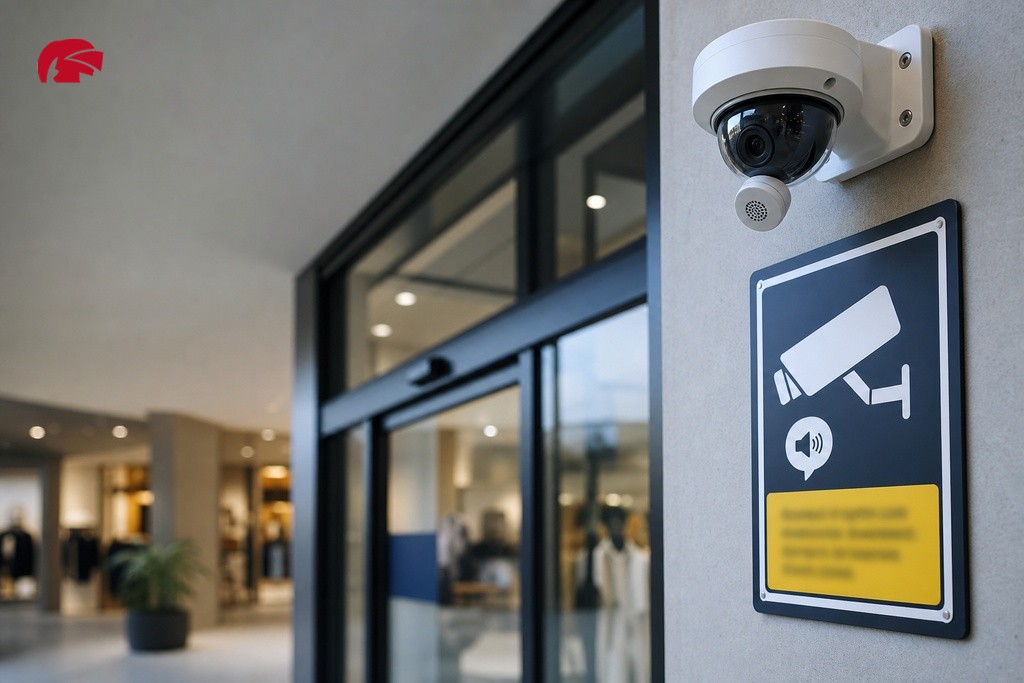
The UK’s surveillance camera code of practice, overseen by the Biometrics and Surveillance Camera Commissioner, recommends that organisations notify people when they are entering an area covered by surveillance cameras. Where audio recording is also in operation, that notification must make this clear. Standard CCTV signage referring only to video monitoring is not sufficient if sound is also being captured.
For commercial premises across Greater Manchester, whether a city centre retail unit on Deansgate, a business park in Salford, or an industrial site in Stockport, this typically means:
- Updating signage to state explicitly that audio recording is in operation.
- Ensuring staff and visitors have been informed through contracts, notices, or other documented means.
- Preparing privacy notices and data protection impact assessments appropriate to the scale and purpose of the system.
| Context | Primary Legal Framework | Key Obligation | Seek Legal Advice? |
|---|---|---|---|
| Residential (personal security) | UK GDPR (limited scope) | Lawful basis for recording; avoid capturing neighbours’ private spaces | Recommended if capturing shared areas |
| Retail / customer-facing premises | UK GDPR, Surveillance Camera Code | Updated signage; lawful basis; privacy notices; retention policy | Yes |
| Workplace / employee monitoring | UK GDPR, RIPA, employment law | Employee notification; documented basis; data protection impact assessment | Yes |
| Public-facing commercial sites | UK GDPR, Surveillance Camera Code | Clear audio-specific signage; privacy notices; proportionate retention | Yes |
Where Audio-Enabled Cameras Add Value and Where They Fall Short
Audio-enabled cameras deliver genuine additional value in environments where verbal exchanges, instructions, or disputes are likely to form part of any incident under review. Settings that benefit most include reception areas and access points, sales floors and customer service zones, and secure entry lobbies.
They also support two-way audio security cameras functionality when a speaker is included, allowing remote communication with visitors or intruders through platforms such as Dahua’s Smart PSS or mobile app interfaces. This capability sits within the broader category of active deterrence CCTV cameras, and audio communication features often appear alongside deterrence-oriented functions in the same product range.
Where audio-enabled cameras tend to fall short:
- Wide open outdoor environments where ambient noise overwhelms the microphone.
- High-ceilinged spaces where distance from the activity zone reduces speech intelligibility.
- Settings where the legal or operational complexity of audio recording outweighs the practical benefit.
In these situations, a well-specified video-only camera with strong resolution, appropriate focal length, and correct placement will usually deliver more reliable results. Research consistently shows that a purposeful, rationale-driven installation outperforms a feature-heavy system deployed without a clear brief.
Key Questions to Answer Before You Buy
Before committing to any audio-enabled system, work through these practical questions, whether you are specifying a single camera for a small retail unit in Manchester’s Northern Quarter or a multi-camera system across a commercial site in Wythenshawe:
- Is the camera rated for indoor or outdoor use, and does its IP rating adequately protect the microphone against moisture and dust?
- Has your NVR or DVR been confirmed to support audio recording on the specific channels you intend to use?
- Does your network infrastructure support the additional data load from multiple audio-enabled IP cameras?
- Is audio recording genuinely useful for your monitoring objectives, or is it incidental to what you actually need?
- Have you reviewed your UK GDPR obligations and updated your signage and privacy notices accordingly?
It is also worth noting that operator attention degrades significantly during passive monitoring. Research cited by Sound Event Detector EU suggests that an operator’s attention can drop substantially after around 20 minutes of continuous monitoring. This is a practical argument for considering cameras with audio-triggered alert capabilities, rather than relying solely on continuous screen observation.
Choosing the Right Audio-Enabled System Through a Trade Supplier
The supplier relationship matters when specifying audio recording security cameras. A distributor with genuine technical depth and a broad product range can help you confirm recorder compatibility, advise on camera placement for optimal audio capture, and identify whether a product is authorised and fully supported in the UK market.
Knight Security is an authorised Dahua distributor. Trade customers across Manchester and the wider North West sourcing Dahua’s audio-enabled cameras can access product support, firmware guidance, and integration advice through a supplier with a direct manufacturer relationship, not a secondary resale arrangement.
Every approved trade customer at Knight Security is assigned a dedicated account manager, so project queries about audio-capable system configuration, NVR compatibility, and next-day stock availability are handled by someone who already understands the account. Trade-only pricing, 30-day credit accounts, and in-stock availability on over 2,000 products reduce the procurement friction that can delay installations.
When to Involve a Professional Installer Before Finalising Your Spec
Some installations benefit from a professional assessment before a single component is ordered. Consider involving a qualified installer early if audio recording will operate across staff and customer areas simultaneously in a multi-zone commercial environment, if your workplace raises data protection questions around employee monitoring, or if a compliance failure could carry serious legal or financial consequences.
A professional installer can carry out a site survey, identify the microphone placement that will actually capture useful audio, and flag legal or technical risks before they become expensive problems.
Knight Security encourages trade customers to treat the supplier relationship as a genuine project resource, not just a fulfilment channel. If you are configuring a system anywhere from Manchester city centre to the surrounding boroughs and want a second opinion on camera selection, recorder compatibility, or how to structure a compliant installation, speaking with your account manager before finalising the spec is always the better approach. Get in touch with the Knight Security team to discuss your requirements and find the right audio-enabled system for your project.
Frequently Asked Questions About Built-In Microphone CCTV Cameras
Do built-in microphone CCTV cameras require separate cabling for audio?
In most IP camera systems, audio travels over the same PoE network cable as video, so no separate cabling is needed. In traditional analogue systems, audio typically runs along the same coaxial cable, though some installers opt for a dedicated audio cable to improve signal clarity. Always confirm cabling requirements with your chosen system before installation begins.
Is it legal to record audio on CCTV in the UK?
Audio recording is legal in the UK but carries additional obligations under UK GDPR. You must have a lawful basis for recording, inform people that audio is being captured through clearly updated signage, and maintain a documented data retention policy. Commercial operators and employers should seek legal guidance to confirm their specific obligations before deploying audio-enabled cameras.
How far can a built-in CCTV microphone pick up sound?
Under ideal conditions, most integrated CCTV microphones capture useful audio within a few metres of the camera. Range varies depending on ambient noise, ceiling height, and housing design. In noisy or large open environments, intelligible audio capture can be significantly reduced, which is why placement close to key activity zones matters so much.
Will audio recording use significantly more storage space?
Audio files are small compared to video streams, so the increase in storage demand is modest. However, running continuous audio recording across several cameras does add up over time. Confirm that your NVR or DVR supports audio on the intended channels, and factor additional storage into your system specification, particularly for longer retention periods.
Do I need to update my CCTV signage if I add audio recording?
Yes. Standard CCTV signage referring only to video surveillance is not sufficient when audio is also being recorded. The UK surveillance camera code of practice requires that people are clearly informed about the nature of monitoring in an area. Signage must explicitly state that audio recording is in operation, and privacy notices should be updated accordingly.
What types of premises benefit most from audio-enabled CCTV cameras?
Audio-enabled cameras add the most value where verbal interactions are likely to be relevant to an incident, such as reception areas, retail sales floors, customer service zones, and secure entry points. In noisy industrial settings or large outdoor spaces, the practical benefit of integrated audio is often limited, and a well-specified video-only system may serve the purpose better.