






What to Know Before Buying Vehicle Detection Cameras

Key Takeaways
Understanding AI-based vehicle detection, key features, and site-specific requirements helps UK buyers choose security cameras that actually deliver reliable, actionable results.
- AI-powered vehicle detection security cameras use object classification to distinguish vehicles from environmental movement, dramatically reducing false alerts compared to basic motion-triggered cameras.
- Key features worth prioritising include directional detection, configurable detection zones, onboard processing for faster driveway camera alerts, and night vision performance under real UK lighting conditions.
- Match the camera to your site type — residential driveways, retail car parks, and warehouse perimeters have different mounting, lighting, and alert requirements that affect which system will perform reliably.
- Confirm compatibility before purchase: check NVR or DVR resolution support, protocol standards (ONVIF or proprietary), storage requirements, and PoE infrastructure to avoid costly issues after installation.
- A professional site survey and system design are essential for commercial projects — vehicle classification surveillance integrated with access control and complementary security measures can reduce crime rates by up to 34%, according to the College of Policing.
Choosing the right vehicle detection security cameras is not as simple as picking the model with the best spec sheet. The technology has advanced significantly, and understanding what separates a genuinely capable system from a basic motion-triggered device can save you from costly mistakes. Whether you are protecting a home driveway in Salford, a retail car park in the city centre, or a large commercial perimeter on the outskirts of Greater Manchester, getting the specification right from the start makes a real difference.
The UK is one of the most surveilled countries in Europe, with around 5.2 million CCTV cameras operating nationwide, approximately one camera for every 13 people, according to the College of Policing. That reflects a mature market with well-established expectations for performance and reliability. For buyers in that market, the question is not simply whether to install cameras, but which system will actually deliver results for your specific site and security goals.
How Vehicle Detection Security Cameras Work
Modern vehicle detection cameras do considerably more than record footage when something moves in front of them. The most capable systems use a combination of AI-based object classification, computer vision, and in some cases radar-assisted sensing to identify vehicles specifically, rather than reacting to any change in the scene. This layered approach means the camera makes a decision before triggering an alert, rather than simply responding to pixel-level changes.
Pixel change detection is the simplest form of motion sensing and is still found in many entry-level motion detection CCTV cameras. It works by comparing successive video frames and flagging any difference above a set threshold. The limitation is clear: a swaying tree branch, a shift in light, or a passing shadow can trigger the same response as an approaching vehicle. True vehicle detection cameras move well beyond this, using trained AI models that recognise the visual characteristics of vehicles as distinct objects, regardless of background movement or environmental interference.
Object Classification vs. Motion Detection
Object classification is what separates a vehicle detection system from a standard motion-triggered camera. An AI-powered camera analyses each detected object and assigns it to a category, typically vehicle, person, or animal, before deciding whether to generate an alert.
This means a leaf blowing across the driveway does not trigger the same notification as a van pulling up to a loading bay. The practical benefit is a significant reduction in false alerts, which is one of the most common complaints among users of basic motion detection cameras. Fewer false alerts means operators pay attention when the system does flag something, and that is the foundation of any effective monitoring setup.
| Feature | Standard Motion Detection Camera | AI Vehicle Detection Camera |
|---|---|---|
| Detection method | Pixel-level change comparison | AI-based object classification |
| Object categories recognised | None; any movement triggers alert | Vehicle, person, animal |
| False alert rate | High; shadows, light, and animals trigger alerts | Low; classification filters irrelevant triggers |
| Alert specificity | Generic motion event | Tagged vehicle detection event |
| VMS / audit trail value | Low; limited metadata | High; searchable, filterable event metadata |
| Typical use case | Basic indoor or low-traffic environments | Driveways, car parks, commercial perimeters |
Key Features That Affect Real-World Performance
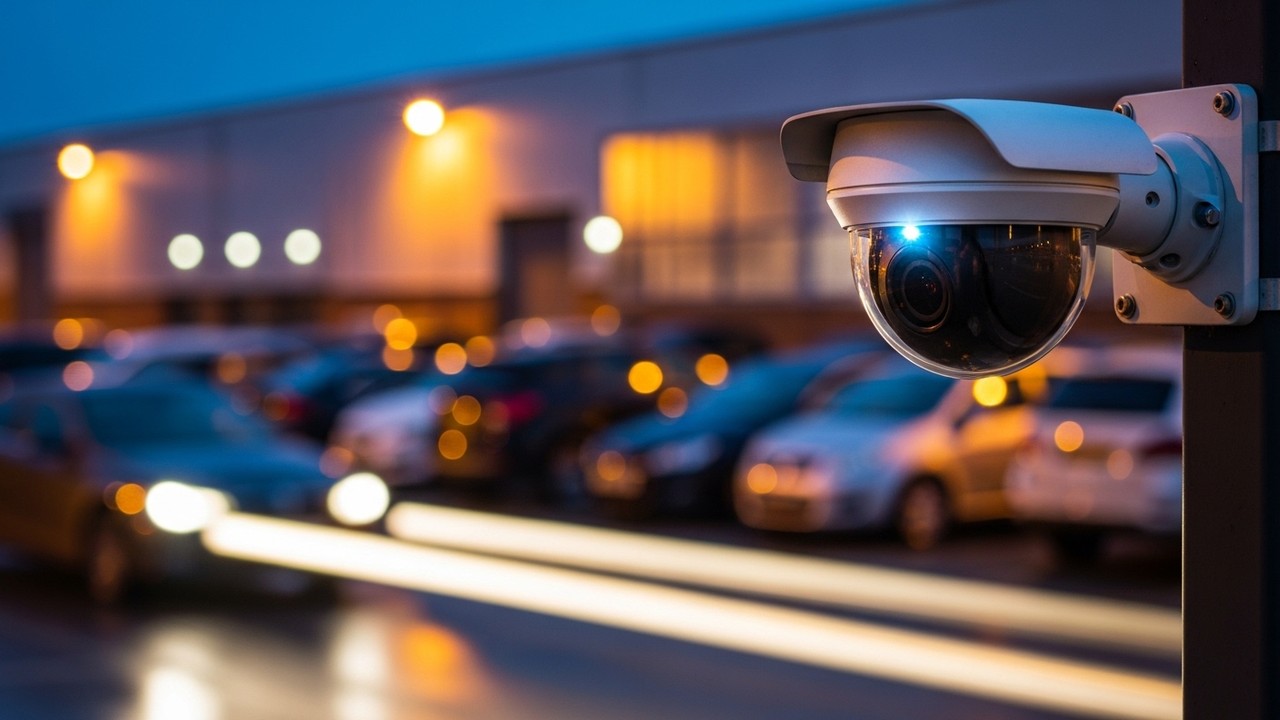
Manufacturers often highlight resolution figures and night vision range as headline features. Both matter, but they are not the only indicators of real-world performance. Detection range, processing speed, and the quality of the onboard AI model all have a direct impact on whether a system delivers reliable alerts under actual operating conditions.
A camera with an impressive resolution but a poorly trained detection algorithm will still generate false positives. A well-calibrated mid-range camera with strong onboard processing can outperform it consistently.
Night vision deserves particular attention. Research published via ScienceDirect (Elsevier) found that deep learning models applied to IP camera footage showed meaningful differences in detection accuracy under varied lighting conditions, confirming that both camera quality and algorithm performance are critical factors. A camera that works well in daylight but struggles at dusk or in wet weather is not a reliable perimeter tool for most sites in the North West, where overcast conditions and rain are a regular reality.
Traffic Detection Camera Features Worth Prioritising
When comparing systems, these features tend to separate more capable products from basic alternatives:
- Directional detection: Alerts only when a vehicle moves toward a defined zone, reducing irrelevant notifications from background traffic.
- Configurable detection zones: Particularly useful for commercial sites where a single camera must cover complex entry and exit points.
- Speed sensitivity settings: Allows fine-tuning of alert thresholds to match site-specific traffic patterns.
- System integration: A camera that communicates cleanly with your NVR, DVR, or VMS adds value from installation through to daily operation.
How to Choose the Right Camera for Your Site
The most expensive camera is rarely the right camera. Matching the system to the specific demands of your site produces better results than defaulting to the highest-specification product available.
A residential driveway, a retail car park, and a warehouse perimeter each present different detection challenges in terms of mounting angles, lighting conditions, traffic volume, and alert response requirements. Identifying those needs before specifying a camera is a step that is frequently skipped, leading to underperforming installations and buyer frustration.
Driveway Cameras for Vehicle Alerts: What Works
For homeowners, driveway camera alerts work best when the camera is mounted at a height and angle that captures the full width of the entry point without creating blind spots at close range. A mounting height between 2.5 and 3.5 metres is typically appropriate for residential use.
Alert response time matters just as much as detection accuracy. A system that takes several seconds to notify you after detecting a vehicle has limited practical value if you want to identify visitors or potential intruders in real time. Cameras with onboard processing, rather than cloud-dependent classification, reduce response latency meaningfully.
Smart Perimeter Monitoring for Commercial Sites in Greater Manchester
Commercial sites have more complex requirements. Smart perimeter monitoring across a warehouse, industrial unit, or multi-access retail site typically involves multiple cameras working together, with detection zones configured to cover entry gates, loading areas, and blind-spot corners. In Greater Manchester, this applies equally to logistics operations around Trafford Park, industrial estates in Rochdale or Oldham, and busy retail developments across the region.
Vehicle classification in these environments goes beyond detecting movement. It allows security teams to differentiate between authorised delivery vehicles, staff cars, and unknown vehicles arriving outside operational hours. The College of Policing notes that CCTV in car parks produced approximately a 51% decrease in vehicle crime, a figure that reflects the value of targeted, well-monitored coverage rather than sprawling general installations.
| Site Type | Typical Detection Challenge | Key Configuration Priority | Recommended Mounting Height |
|---|---|---|---|
| Residential driveway | Narrow entry, close-range blind spots, low traffic volume | Alert response speed, onboard processing | 2.5 to 3.5 metres |
| Retail car park | High traffic volume, overlapping vehicle paths, varied lighting | Configurable detection zones, directional detection | Varies by coverage area |
| Warehouse or industrial perimeter | Multiple access points, after-hours monitoring, large scene complexity | Vehicle classification, VMS integration, automated alerts | Depends on site layout |
| Multi-access commercial site | Entry gates, loading bays, blind-spot corners | Multi-camera coordination, detection zone mapping | Depends on site layout |
What Vehicle Classification Surveillance Adds to Your System
Vehicle classification surveillance gives operators more than a recording of what happened. When a camera correctly tags an event as a vehicle detection rather than a generic motion trigger, that metadata becomes part of the audit trail. Events can be searched and filtered by type, timestamps become more meaningful, and integration with VMS platforms allows for automated responses, such as gate commands or operator alerts, tied specifically to vehicle presence.
This intelligence is particularly valuable for after-hours monitoring, where distinguishing between a vehicle entering a restricted area and background environmental movement can be the difference between a useful alert and an ignored one.
Buyers should set realistic expectations around classification accuracy. Performance varies depending on lighting, camera placement, and scene complexity. High-traffic environments with overlapping vehicle paths present greater challenges than a single-lane access road. Occlusion, where one vehicle partially blocks another, and poor contrast between vehicle and background are known limitations in current AI models. Understanding these factors helps you configure detection zones and set alert sensitivity at a level that balances responsiveness with accuracy.
Compatibility, Recording, and System Integration
A vehicle detection camera that cannot communicate effectively with your recording infrastructure creates problems at the project stage. Compatibility between camera firmware, NVR or DVR platforms, and any third-party VMS software needs to be confirmed before purchase, not after installation.
The College of Policing’s review of 76 studies found that active monitoring by operators increases the effectiveness of CCTV systems. That means your recording and management infrastructure is just as important as the cameras themselves.
How to Check Car Detection Camera Compatibility Before You Buy
Working through a compatibility check before committing prevents avoidable problems on site. Confirm the following before placing an order:
- Resolution support: Confirm your NVR or DVR can handle the camera’s output resolution, especially when adding to an existing system with older hardware.
- Protocol compatibility: Verify whether the camera uses ONVIF, a proprietary protocol, or both, and whether your recording platform supports it fully.
- Storage requirements: AI-enabled cameras generate more metadata per event. Factor this into storage calculations before sizing your NVR or network storage.
- Network infrastructure: Check that cabling, switches, and PoE provision meet the camera’s power and bandwidth requirements, particularly for multi-camera commercial setups.
What to Verify Before Committing to a Purchase
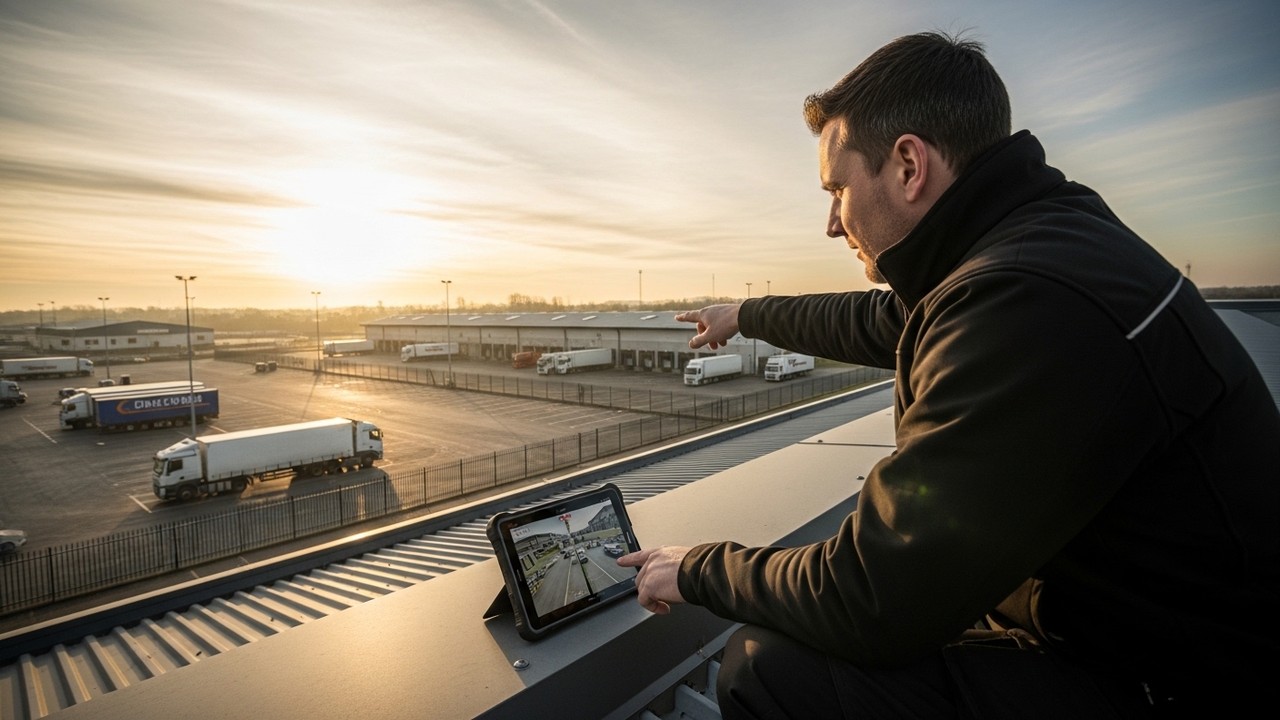
A site survey distinguishes a well-specified installation from a guessed one. Understanding the physical environment, existing infrastructure, lighting conditions at different times of day, and the likely location of detection zones shapes every specification decision that follows.
For larger commercial projects, professional design support helps ensure the system performs as intended rather than simply being installed. Buyers should also verify installer certification where relevant and confirm manufacturer warranty terms, including what is and is not covered for AI processing components, before placing any order.
When a project involves multiple cameras, access control integration, or a phased rollout across several sites, the specification process becomes more involved. The College of Policing notes that combining CCTV with complementary security measures can potentially reduce crime rates by up to 34%, which reinforces why system design, rather than individual product selection, is the more important starting point for any serious installation.

How Knight Security Supports Trade Buyers at the Project Stage
Knight Security operates as a trade-only distributor, which means the support available to approved customers goes beyond simply processing an order. Every trade customer is assigned a dedicated account manager who works alongside them from specification through to supply, helping to match product selection to project requirements rather than defaulting to the most available option.
As an authorised Dahua distributor, Knight Security supplies a product range that includes capable vehicle detection and classification solutions suited to both residential and commercial applications. With next-day delivery available on over 2,000 stocked products and trade-only pricing that does not change with promotional cycles, buyers can plan procurement with confidence.
Whether you are sourcing a single camera for a residential client in Stockport or specifying a multi-camera smart perimeter monitoring setup for a commercial site in Manchester city centre or across the wider North West, Knight Security’s trade model is built around making that process straightforward.
If you are at the specification stage of a vehicle detection project in Manchester or want to discuss the right Dahua-authorised product for your application, get in touch with the Knight Security team today. Your dedicated account manager is ready to help you move from brief to installation without the usual delays.

Frequently Asked Questions
What is the difference between a vehicle detection camera and a standard motion camera?
A vehicle detection camera uses AI-based object classification to identify vehicles as distinct objects before triggering an alert. A standard motion camera reacts to any pixel-level change in the scene, including shadows, light shifts, or animals. This means vehicle detection cameras produce significantly fewer false alerts and more actionable notifications.
How accurate are AI vehicle detection cameras in low light or bad weather?
Accuracy varies by camera quality and algorithm design. Research confirms that detection performance differs meaningfully under varied lighting conditions. In overcast or wet environments, common across the North West, cameras with strong onboard processing and optimised night vision tend to maintain more consistent results than those relying on cloud-based classification.
What mounting height is recommended for a driveway vehicle detection camera?
For residential driveways, a mounting height between 2.5 and 3.5 metres is generally appropriate. This allows the camera to capture the full width of the entry point while minimising close-range blind spots. The exact position should be confirmed during a site assessment based on the specific layout of your property.
Do vehicle detection cameras work with existing NVR or DVR systems?
Compatibility depends on the protocols and firmware versions involved. Before purchasing, confirm that your existing NVR or DVR supports the camera’s output resolution and communication protocol, either ONVIF or the manufacturer’s proprietary standard. AI-enabled cameras also generate additional metadata, which may affect your current storage capacity.
Why is a site survey important before installing vehicle detection cameras?
A site survey identifies the physical conditions that directly affect detection performance, including lighting at different times of day, mounting angles, detection zone placement, and infrastructure capacity. Without one, cameras are often positioned or configured in ways that reduce accuracy. For commercial installations, a survey is essential to ensure the system design matches the actual security requirement.
Can vehicle classification cameras integrate with access control or gate systems?
Yes, many vehicle classification cameras can be integrated with VMS platforms that support automated responses, such as gate commands or operator alerts triggered specifically by vehicle detection events. Feasibility depends on your chosen camera model, VMS compatibility, and the access control hardware already in place on site.