








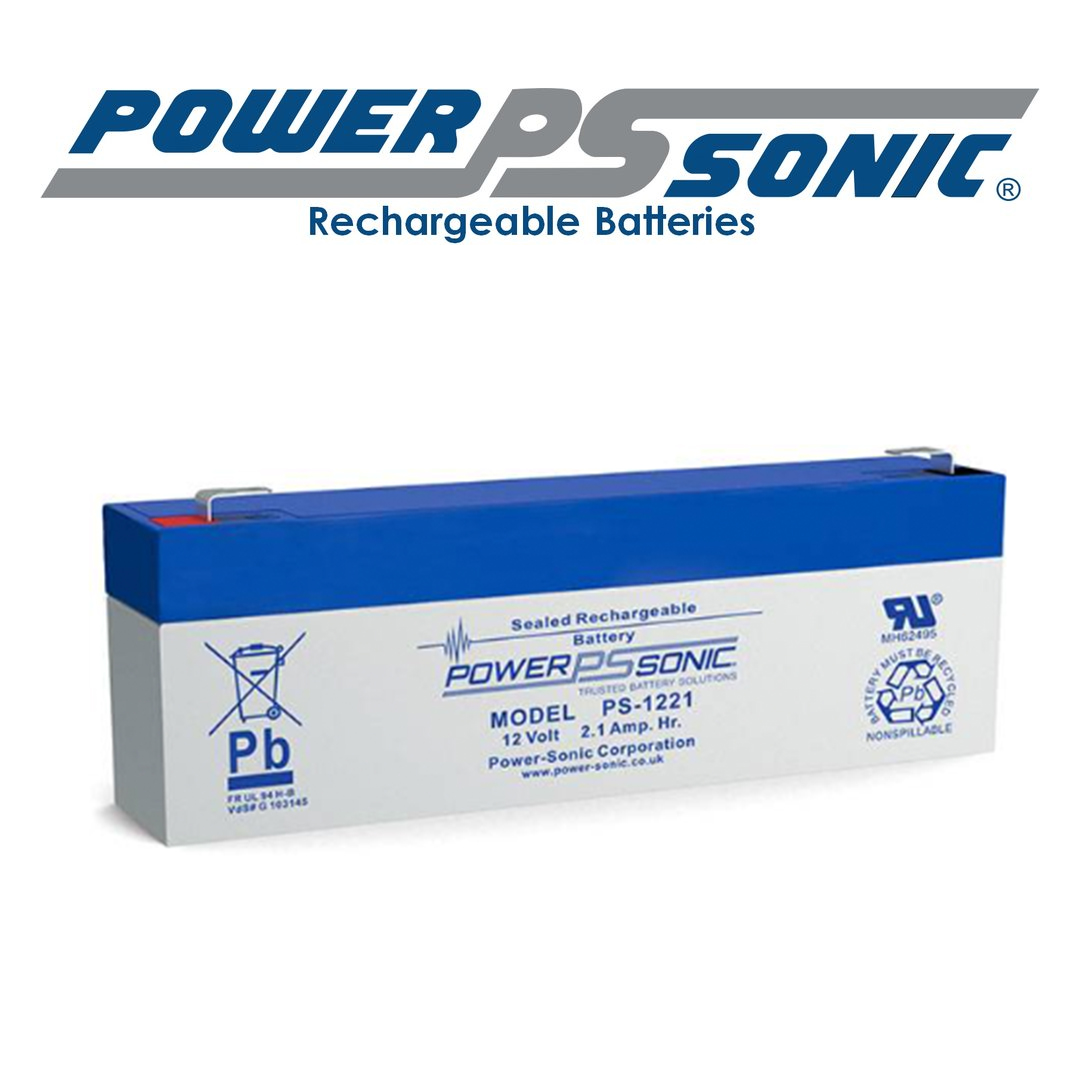



Alarm panels require a standby battery to maintain system operation during a mains power failure. BS EN 50131 Grade 2 systems require a minimum standby duration of 12 hours in alarm condition or 24 hours in quiescent state (depending on the specific standard and system classification), and the battery capacity must be sufficient to support the panel and its devices for the required duration.
The 2.1Ah capacity is the smallest in the standard alarm battery range and is appropriate for compact alarm panels with a small device count and low current draw, where the 2.1Ah capacity is sufficient to meet the required standby duration. For panels with more devices, higher standby current requirements, or longer mandatory standby periods, the 3.2Ah battery (PS-1230) or a larger capacity battery is the correct specification.
The sealed lead acid (SLA) format is the standard battery chemistry for alarm panels: SLA batteries are maintenance-free, safe for enclosed installation within the alarm panel housing, tolerant of the continuous float charge that the alarm panel charger applies, and do not emit gas during normal operation.
For alarm engineers replacing standby batteries in smaller alarm panels and completing new panel installations across London and the UK where 2.1Ah is the correct battery capacity for the panel and device count, the PS-1221 provides the standard small-capacity alarm standby battery.
Key Features
- 12V 2.1Ah sealed lead acid standby battery for small alarm panels
- Smallest capacity in the standard alarm battery range
- Sealed lead acid: maintenance-free, float-charge tolerant
- Correct for compact panels with low current draw and device count
- For larger panels use PS-1230 3.2Ah or higher capacity
- Standard alarm standby battery for BS EN 50131 compliant systems





Reviews
Clear filtersThere are no reviews yet.