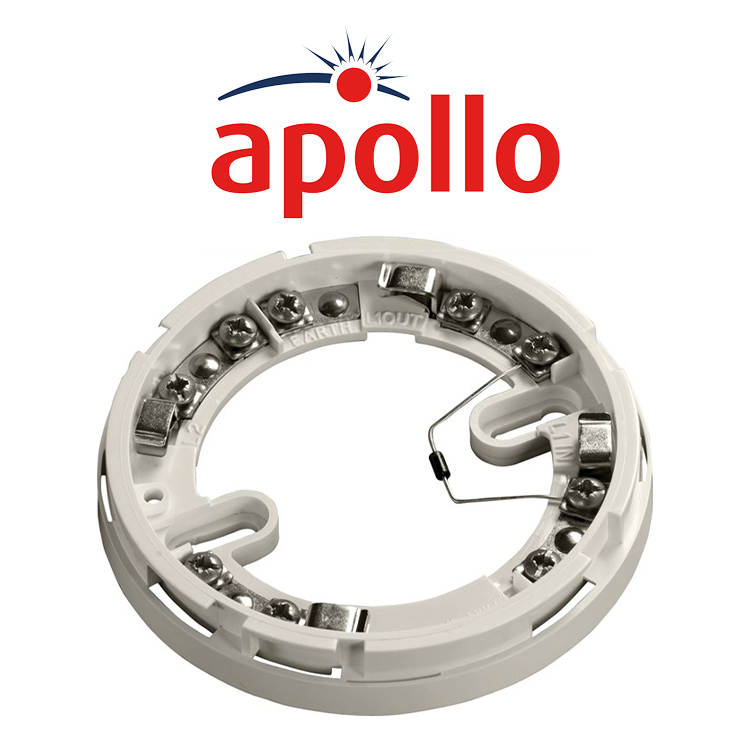
In a conventional fire alarm system, the detector head and its base are separate components: the base is fixed to the ceiling and wired into the detection zone circuit, and the detector head plugs into and locks onto the base. This design allows detector heads to be replaced or swapped without disturbing the zone wiring.
The diode in the base serves a specific function in fire alarm zone circuits where zone isolation via diodes is required: the diode allows the detection loop to continue past a triggered detector without short-circuiting other devices on the same zone, enabling more specific location identification on certain conventional panel configurations. Not all conventional systems require diode bases, and the specification of diode versus non-diode bases is determined by the fire alarm system design.
The Series 65 base is compatible with all Series 65 detector heads: the heat detector, optical smoke detector, and ionisation smoke detector in the Series 65 range all use the same base format. This interchangeability means a single base type can be installed throughout a building, with different detector types fitted according to the detection requirement of each room.
For fire alarm engineers completing Series 65 conventional fire system installations and maintenance across London and the UK, the 45681-201APO provides the Series 65 detector base with diode for positions where a diode base is specified in the system design.
Key Features
- Series 65 detector base for conventional fire alarm detector heads
- Integral diode for zone circuit configurations requiring diode isolation
- Universal Series 65 base: compatible with heat, optical, and ionisation heads
- Separates base wiring from detector head for easy head replacement
- Wiring termination at the base: detector head plugs in and locks
- Correct for Series 65 systems where diode bases are specified